HND · Apply & report
Internship reports, field reports, applied projects, professional case studies, surveys and presentations build problem identification, information gathering and professional reporting skills.
RESEARCH AT HISMIL
Investigating real problems. Developing credible solutions. Advancing communities.
Student projects, applied inquiry and community initiatives connect academic learning with challenges in health, technology, governance, business and economic development.
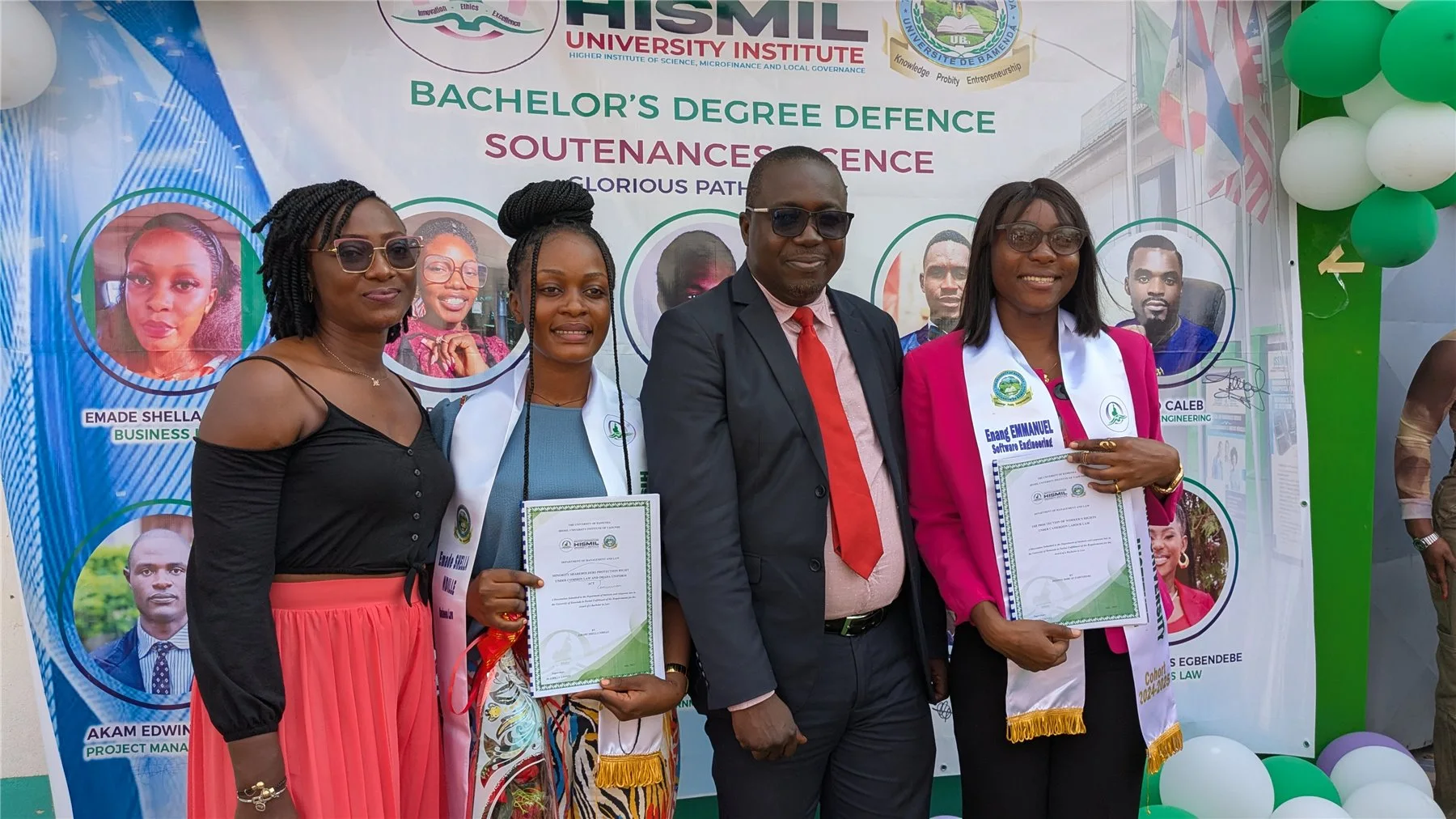
PRACTICAL INQUIRY FOR INCLUSIVE DEVELOPMENT
Projects that support health, governance, community and economic development remain at the heart of our research identity.
HISMIL encourages students to examine challenges affecting individuals, institutions, businesses and communities, and develop evidence-based recommendations that contribute to inclusive and sustainable development.
Research should not end on a library shelf. It should help us understand problems and contribute to better solutions.
RESEARCH WITH PURPOSE
Research is a disciplined process of inquiry, guided by relevance, methodological quality, integrity, critical thinking and practical application.
Observe → Question → Investigate → Analyse → Interpret → Recommend → Contribute
HND → DEGREE → MASTER’S
From foundational reporting to advanced inquiry, each level develops stronger analytical capacity.
Internship reports, field reports, applied projects, professional case studies, surveys and presentations build problem identification, information gathering and professional reporting skills.
Literature review, research design, instruments, data collection, interpretation and defense develop deeper analysis and greater independence.
Advanced methodology, critical analysis and independent investigation support defensible conclusions relevant to professional, institutional or societal problems.
OUR RESEARCH THEMES
Explore possible themes connected to your programme and the needs of society.
Software systems, AI, cybersecurity, automation, digital business, information systems, data and technology adoption.
Nursing, community health, laboratory sciences, maternal and child health, patient care, health systems and healthcare innovation.
Microfinance, accounting, banking, marketing, SME development, customer behaviour, innovation and business sustainability.
Human resources, leadership, projects, logistics, communication, performance and workplace development.
Public administration, decentralisation, accountability, community participation, development planning and local governance.
Youth empowerment, inclusion, education, employment, social transformation and local economic development.
STUDENT RESEARCH AT HISMIL
Research may take the form of internship reports, dissertations, professional projects, case studies, applied research, innovation projects and community investigations.
ACADEMIC OVERSIGHT & RESEARCH INTEGRITY
The Committee coordinates and strengthens academic research across HND, Degree / Licence, Master’s, internship reports and approved professional research projects.

Topic → Approval → Supervision → Methodology → Writing → Review → Defense → Corrections → Final Submission
The Committee supports defined academic standards so that research is credible, professionally presented and appropriate to the qualification pursued.
Contact the Research Office ↗Review relevance, feasibility and alignment with the student’s field.
Match programme, expertise and research area.
Guide structure, formatting, referencing, certification pages and submission.
Review design, sampling, instruments, data collection and analysis.
Follow key research milestones.
Promote originality, responsible citation and ethical practice.
Check quality, completeness and readiness.
Support panel composition, scheduling and assessment.
Follow examiner recommendations, final clearance and preservation.
Contact the institution for the current committee membership and responsibilities. The photographs show defense panels; they do not identify Research Committee members.
QUALITY AT EVERY STAGE
Quality review helps each student produce academically credible work and communicate it professionally.
Address a meaningful, clearly defined problem.
Use systematic and defensible methods appropriate to the question.
Demonstrate originality, honesty, ethical conduct and responsible citation.
Meet expectations for structure, language, formatting, analysis and defense.
TRANSPARENT ACADEMIC RESPONSIBILITIES
Students remain responsible for their own work, supported by supervision and institutional review.
FROM IDEA TO FINAL SUBMISSION
Confirm programme-specific procedures and deadlines with your department.
Identify a relevant research problem.
Review relevance and feasibility.
Assign suitable academic guidance.
Develop objectives, literature review and methodology.
Review methods and research instruments.
Carry out approved fieldwork or data gathering.
Analyse and interpret the information collected.
Develop the document with supervisor feedback.
Check completeness and compliance.
Present the work and respond to the panel.
Complete the required revisions.
Clear and archive the approved final version.
GUIDED RESEARCH. STRONGER OUTCOMES.
Supervisors help students refine topics, clarify objectives, strengthen methodology, organise writing, analyse findings, develop arguments and prepare for defense.
The supervisor guides the work; the student investigates, writes and takes ownership of the research. Regular feedback helps turn a promising question into a credible academic contribution.
Request current supervision standards, marking criteria, defense and correction forms, submission procedures and institutional templates.
Request Supervisor Resources ↗RESEARCH WITH INTEGRITY
Originality, proper citation, responsible data collection and accurate reporting are fundamental.
Obtain informed consent where necessary, protect confidentiality and handle research information responsibly.
Acknowledge sources, cite correctly and avoid plagiarism or misrepresentation.
Avoid fabrication, falsification, manipulation of results and misleading claims.
DEVELOPING STRONG RESEARCHERS
Discuss methodology support, seminars and workshops with your supervisor or department.
STUDENT DEFENSE EXCELLENCE
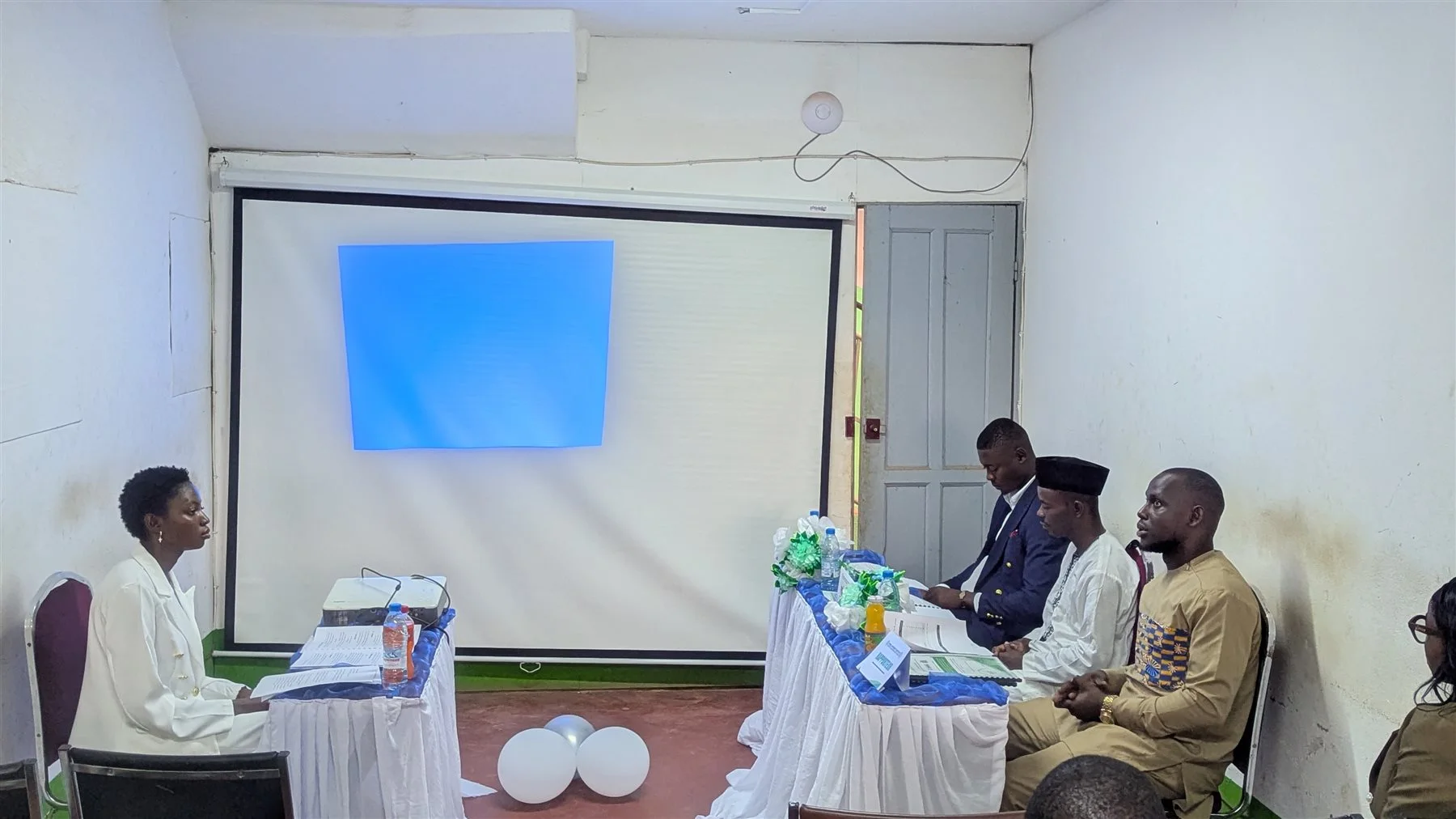
Academic defenses allow students to explain their methods, findings and recommendations, and respond constructively to academic questions.
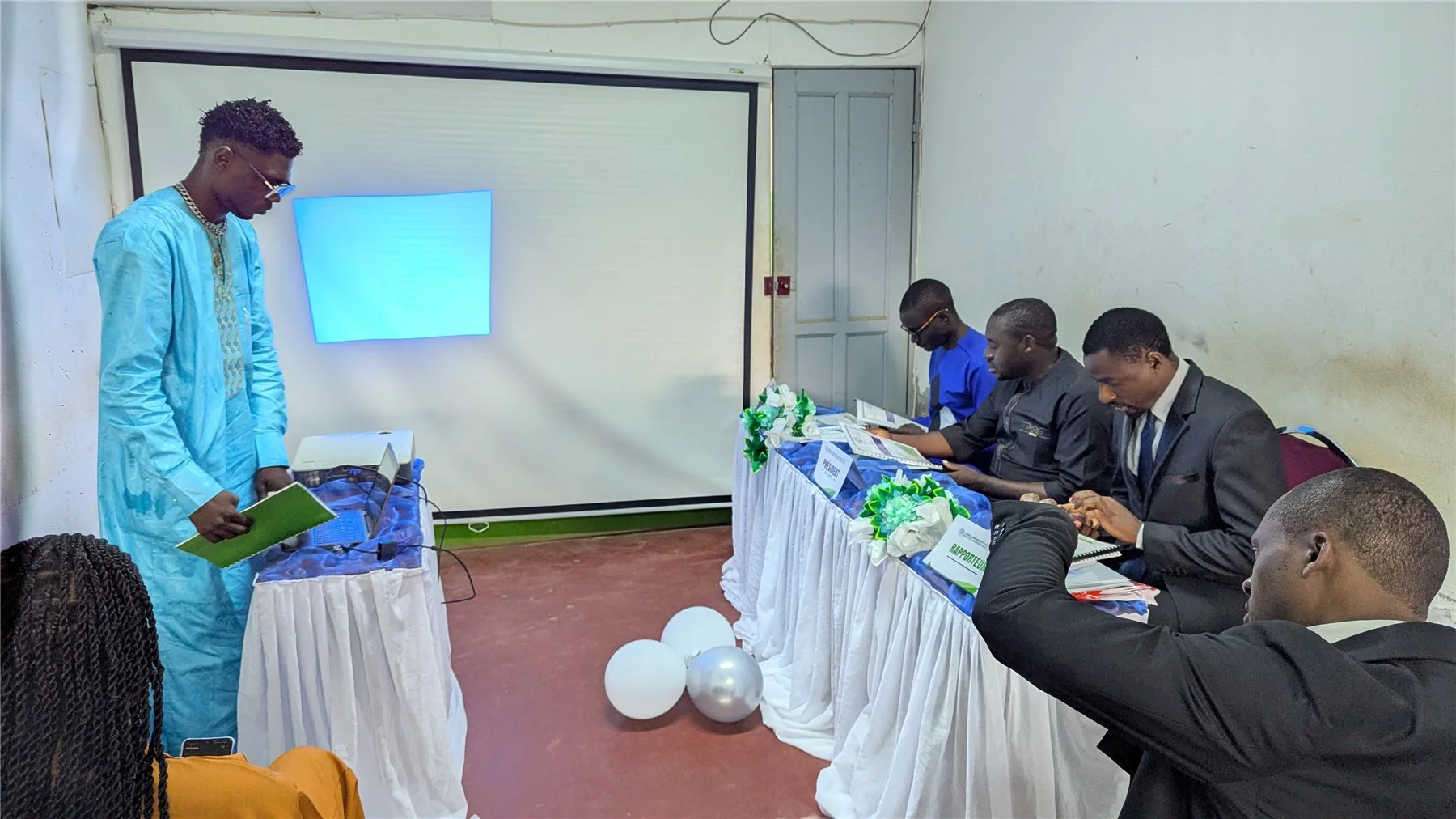
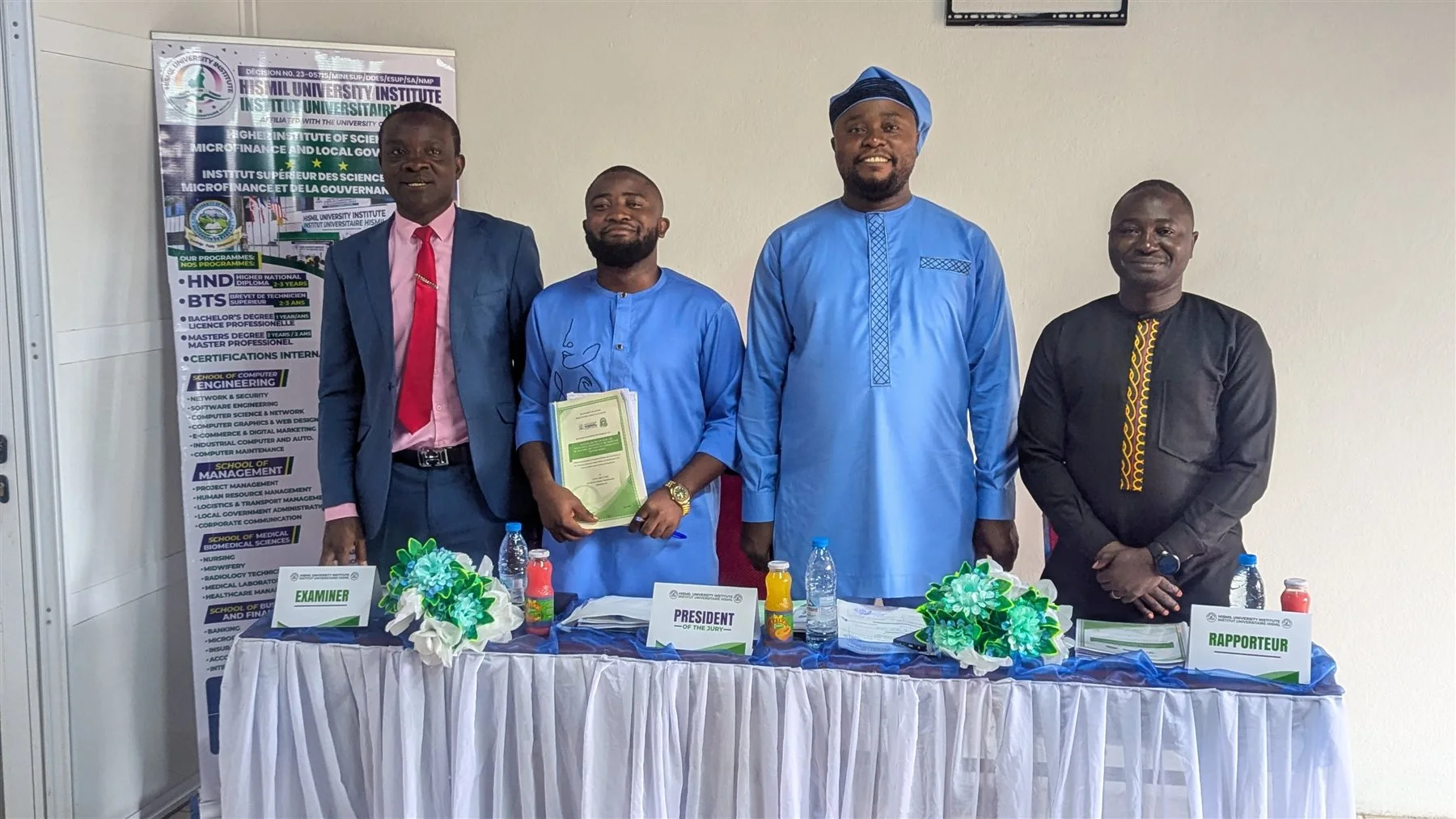
Selected photographs from the Bachelor’s / Licence defense sessions, July 2026.
FROM RESEARCH TO SOLUTION
Promising research may inform software, prototypes, business solutions, community interventions, digital systems, startup ideas, policy recommendations or professional tools.
Research → Insight → Solution → Innovation → Impact
Explore the HISMIL Tech Hub ↗KNOWLEDGE THAT SERVES SOCIETY
Health, governance, community and economic development remain central to Research for Inclusion.
Investigate healthcare challenges and local needs.
Explore entrepreneurship, youth employment and business development.
Examine local governance, public administration, education and digital access.
RESEARCH HIGHLIGHTS
From inquiry to academic presentation and professional application.
FEATURED RESEARCH · 2026
Explore research topics in technology, health and accounting. Full abstracts and approved outputs can be requested from the institution.
HND · 2026
Doungmene Akpuafour Nancy Nneka
Software Engineering
Research theme: Technology & Digital Transformation
Supervisor: Mr. Gbetnkom Njion Jefe
View the project listing →HND · 2026
Tifuh Maliko Choh
Software Engineering
Research theme: Technology & Digital Transformation
Supervisor: Eng. Mbang Nzima Loic
View the project listing →HND · 2026
Bessog Jude Egbe
Software Engineering
Research theme: Technology & Digital Transformation
Supervisor: Eng. Ernest Mbumbo
View the project listing →HND · 2026
Yombi Joyce
Software Engineering
Research theme: Technology & Digital Transformation
Supervisor: Eng. Mbang Nzima Loic
View the project listing →HND · 2026
Mafopa Fomekong Alexia Kevine
Health Sciences
Research theme: Health & Biomedical Sciences
Supervisor: Mr. Jouonang Milliamas Morel
View the project listing →HND · 2026
Ayemdji Tchouala July Sandra
Health Sciences
Research theme: Health & Biomedical Sciences
Supervisor: Mr. Nzonda De Fongo Steve Blanc
View the project listing →HND · 2026
Mafeuku Samira Gladex
Health Sciences
Research theme: Health & Biomedical Sciences
Supervisor: Mr. Tchapda Fosto F. Luc
View the project listing →HND · 2026
Temah Livette Osoh
Accounting
Research theme: Business, Finance & Entrepreneurship
Supervisor: Dr. Chou Joshua
View the project listing →A showcase of capstone research carried out by HISMIL HND candidates across Software Engineering, Health Sciences and Accounting.
Browse HND research projects by discipline. Project titles describe the research undertaken; findings and full texts are available only through approved institutional access.
RESEARCH RESOURCES & GUIDELINES
Request the latest approved guides, forms and templates from your department or the Research Office.
Research format, internship reports, HND research, Degree / Licence research and Master’s dissertations.
Proposal template, research approval, supervisor approval and questionnaire guidance.
Defense assessment, correction clearance and library submission forms.
Research ethics and the institution’s current APA referencing guidance.
Contact the Research Office to obtain the current approved guides, forms and submission requirements.
Request Research Guidelines ↗Request Research Forms ↗RESEARCH EVENTS & ACADEMIC ACTIVITIES
Defense sessions, methodology workshops, seminars, supervisor meetings, conferences and student presentations.
Visit News & Events for published updates or contact your department for current schedules.
View News & Events →PRESERVING HISMIL KNOWLEDGE
Approved final versions preserve the institution’s academic record and support future inquiry.
Incorporate examiner recommendations, obtain correction clearance and follow the institution’s final library submission procedure.
Ask about access to HND reports, Degree research, Master’s dissertations, abstracts and selected applied projects. A searchable digital repository is a future development.
Ask About Library & Research Access ↗FROM INQUIRY TO IMPACT
Research is an opportunity to develop credible inquiry, independent thinking and professional quality, supported by supervisors, the Research Committee and academic structures.
HISMIL HIGHER INSTITUTE · Research • Innovation • Integrity • Impact
Our academic milestones
Explore presentations and achievements from two HISMIL cohorts.